Archives
-

Insights Fall Issue 2025
Vol. 1 (2025)Welcome to the First Issue of C’IRThe first issue of CORALS’ Insights & Review (C’IR) launches softly, Fall 2025, with its debut installment of Tales of WOE. This early thought-piece, a precursor to a forthcoming research study, offers guidance, framing, and a bit of grounded modeling for any thinkers, movers, doers, or perceivers who are ready to test their ideas in print.
C’IR (pronounced “seer” – like someone who sees) stands not on principle, but on feet – the feet of its authors and readers. We are not beholden to polish, perfection, or proof, but rather to real-world relevance. If you’ve written something honest, useful, and ethically defensible, we want to read it.
Our call is simple: bring us your frameworks, models, conceptual pieces, industry experiences, theoretical mashups, or working papers. Research proposals, white papers, even essays you were too nervous to publish anywhere else – we welcome them. Show us application and we’ll show you our digital beach.
Submissions accepted and published before December 31, 2025 will be included in this inaugural Fall 2025 issue. We publish three issues annually – Fall, Spring, and Summer – and invite you to join the founding voices who braved the unwalked path. This journal will proudly ignore winter – too cold for embracing, too icy for discussion, and too dark for display. With its homebase in Port Saint Lucie, Florida, C’IR lives in the sun. Pour a cold sip, dig your feet into the sand, and read with intention.
Oh – and in case you’re wondering: we eschew the em-dash. Instead, we’ve created our own space–en-dash–space style as our signature. It’s our way of saying “no thanks” to AI-generated filler and “yes please” to the cadence of real human voices.
C’IR is our beachside alternative to the Harvard Business Review – approachable, readable, and slightly sun-kissed. No tie required.
-
Insights Spring 2026
Vol. 2 No. 1 (2026)Spring 2026 — Seeing ClearlySpring invites clarity as our landscapes emerge from hibernation and as systems come back into view with a refreshed vision of their importance. As light returns and activity resumes, the structures that shape public life become more visible, and the questions they raise feel both timely and necessary. In this issue of C’IR, we focus on how perspective, technology, and governance intersect in environments experiencing rapid change.
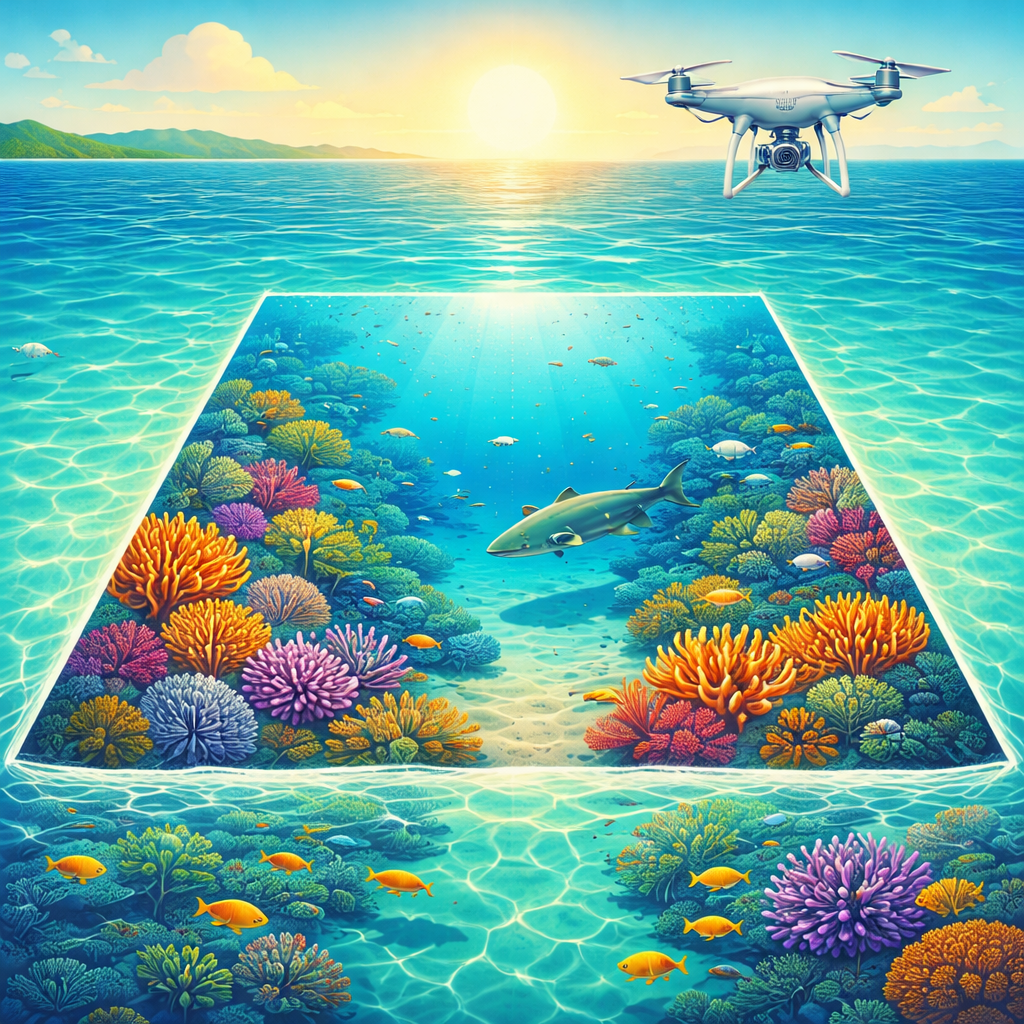
The Spring 2026 issue opens with an examination of drone surveillance in law enforcement. The article approaches drones as instruments of perspective, exploring how aerial technologies influence governance, legal boundaries, public trust, and institutional responsibility. As these tools become embedded in public systems, the conversation increasingly centers on integration, oversight, and ethical stewardship within complex operational environments.
This issue continues the intellectual scope introduced in our inaugural release. In our first issue, contributors examined the rising costs of higher education and their implications for access and mobility, offered applied guidance for dissertation chairs overseeing qualitative research, and introduced the Whacked-Out Environment (WOE) framework as a lens for understanding fear-driven organizational breakdowns. Together, these contributions reflected a shared interest in how systems function in practice and how decisions ripple through lived professional and civic spaces.
C’IR remains dedicated to thoughtful analysis grounded in experience, scholarship, and applied insight. We welcome contributions that deepen understanding, surface complexity, and advance meaningful dialogue. We are particularly interested in thought pieces, applied analyses, and reflective scholarship from emerging researchers, post-doctoral scholars, faculty, practitioners, and professionals working within complex systems. Perspectives from law enforcement and public service professionals are encouraged, especially those that add nuance, context, and firsthand insight to evolving conversations.
Spring is a season of renewed attention. It is a time to observe more carefully, to question with purpose, and to engage with the systems that shape our shared environments. C’IR continues to provide space for rigorous, forward-looking thinking that helps illuminate where we are – and where we may be headed.
— Editor in Chief, Dr. Michelle K. Preiksaitis


